Speculating on a bolder future for Birrarung Marr and Naarm
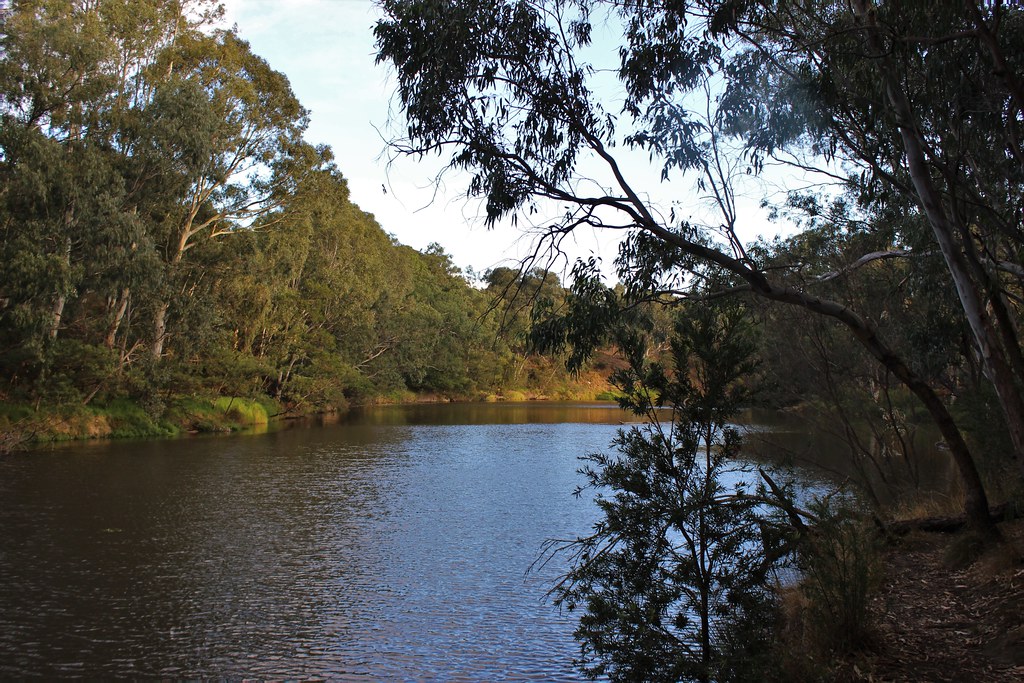
The Country is burning, flooding, drying, and tenuously surviving and whether we witness it first hand or through images that proliferate through 24-hour news cycles. We have reached a turning point from which there is no escape. Resolving the searing climate catastrophe we are living through will be the settler nation’s biggest contribution to First Nations sovereignty—a step that requires us to interrogate the fragile government promises that drip feed hope. The ongoing impact of colonisation is endemic. It exists as a vicious loop where the Western conceptions of land management and ownership which we cling to, cause the natural disasters we are living through. But as our newsfeeds remind us in yet another climate crisis article:
‘The policies currently in place to tackle the climate crisis around the world will lead to “catastrophic” climate breakdown, as governments have failed to take the actions needed to fulfil their promises, three former UN climate leaders have warned.’Fiona Harvey for The Guardian1
Within this continent, western settler government policies remain the dominant system ill-equipped to tackle the crisis. However, a growing number of collaborations with First Peoples and the continued use and understanding of our knowledge has yielded an unstoppable drive to shift power and Western ways of thinking. As the Albanese Labor government prepares steps towards an Indigenous voice to Parliament and Victoria continues on the path towards Treaty, environmental policy and legislation has started to centre First Nations conceptions of place, people and Country.
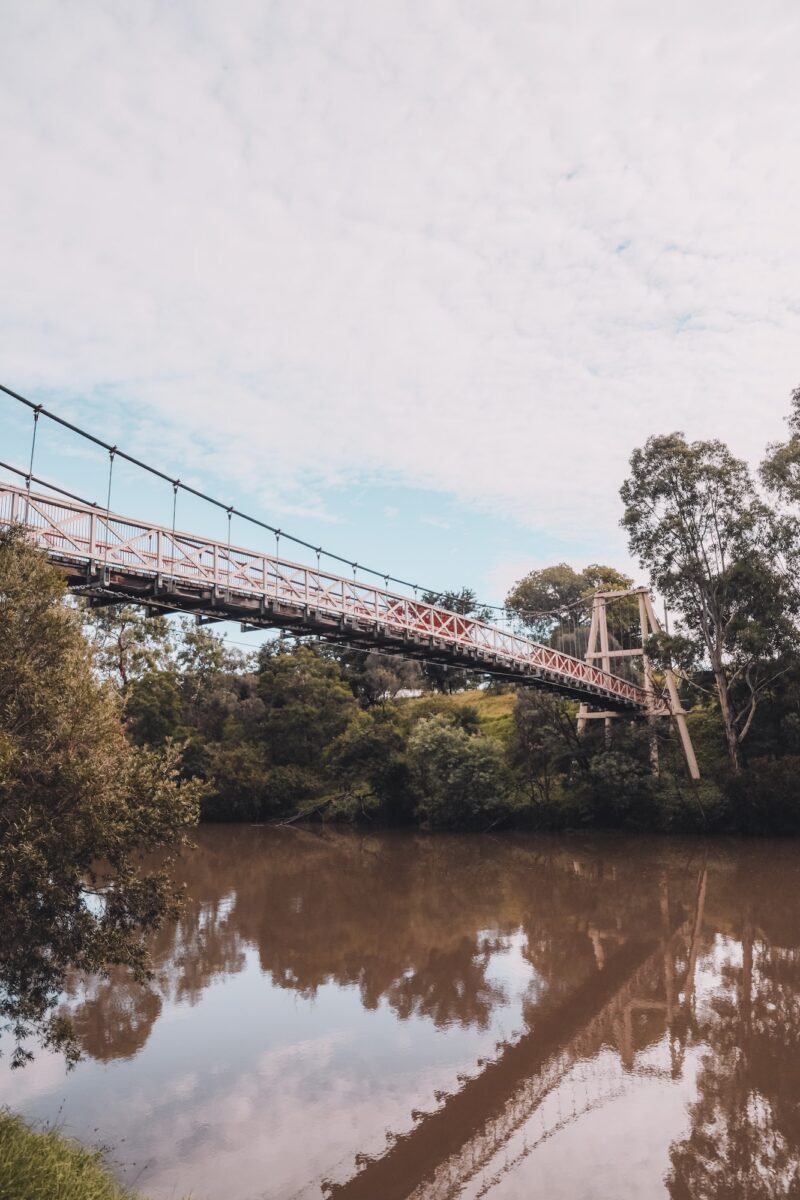
The 2017 Yarra River Protection (Wilip-gin Birrarung murron) Act initiated through what was then called Victoria’s Department of Land, Water and Planning (now the Department of Energy, Environment and Climate Action) is an important and complex example of shifting away from settler colonialism’s encroachment on Country. This is achieved by elevating the natural environment— a transformation enabled by following First Peoples cultural understanding of land. As the website describes it, the Act is:
‘The first legislation in Australia to be co-titled in a Traditional Owner language. ‘Wilip-gin Birrarung murron’ translates as ‘keep the Birrarung alive’ in Woi-wurrung, the traditional language of the Wurundjeri Woi-wurrung people. Woi-wurrung was used in recognition of the Traditional Owners’ custodianship of the river and their unique connection to the lands through which the river flows. It is also a Victorian and Australian first in legally identifying a large river and its corridor, which transverses many boundaries, as a single living and integrated natural entity for protection.’Department of Energy, Environment and Climate Action Victoria2
But while using Woi-wurrung language decentres western thinking and activates Blak voices traditionally silenced by policy and legislation, it is still hard to know how the act will ‘keep the Birrarung alive.’ Beneath the title and opening preamble, Woi-wurrung is quickly replaced by legal jargon in English, as if decentring colonial legislation any further is not yet possible. The act is constructed as a list of sections outlining objectives, principles, governance, divisions, subdivisions and amendments to the act; an abstract web of bureaucracy trying to hold the gravitas of a living body of water. The purpose of the act states that it is:
“to provide for the declaration of the Yarra River and certain public land in its vicinity for the purpose of protecting it as one living and integrated natural entity;”Department of Energy, Environment and Climate Action Victoria3
And although protection is urgent, it is never entirely clear how or what protection looks like. Further strategic direction is provided, such as the establishment of a Birrarung Council that includes Wurundjeri Woi-Wurrung elders to provide advice to the Minister, as well as the need to develop an additional policy referred to as the Yarra Strategic Plan; a set of principles are also outlined, but they appear meek compared to what Kulin Country has endured. Listing the impacts of climate change, emphasising shared governance, respecting Aboriginal culture, including Traditional Owners in decision-making, and avoiding negative environmental impacts should be foundational. But assuming that these environmental goals should have pre-existed well before the 2017 Act, and wondering why the Act seems unable to make hierarchical shifts in power, also reminds me of just how hard Wurundjeri Woi-Wurrung and other First Nations people have worked and endured to maintain sovereignty and survivance. Within a government framework, it seems that environmental change moves in ebbs and flows, finding a gradual speed—a strange contrast to the river’s tremendous power, something that Wurundjeri Woi-Wurrung people hold.
It is difficult to critique legislation that has been informed by First Peoples knowledge systems. But while their culture restores life in a river that settler colonialism viewed as a disposable resource, it is possible that larger goals are restricted when change continues to operate within government systems. Beyond the opening preamble in Woi-Wurrung language, the act itself seems disconnected to the water it protects, trapped within its own bureaucratic boundaries for career public servants to refer to when required. Any act that shifts the status of a river to something that requires protection rather than extraction is significant. But there is nothing that directly states the government’s liability to uphold the river’s rights. As rampant development encroaches on the river’s edge, we are left dreaming of a time in the past, present and future where we swam, drank and lived alongside it in reciprocity.
In an interview for Berlin Artlink, Wiradjuri writer, artist and curator Hannah Donnelley discussed the work of Wurundjeri Woi-Wurrung Elder Uncle David Wandin who contributed to the video series River Voices for the 2022 Sydney Biennale. In the video he describes his role on the Birrarung council as essential and vital, alongside Aunty Di Kerr and Aunty Margaret Gardiner. It was important for me to further reflect on the work and care that elders like Uncle Dave provided but I still felt an ambivalence towards the council and Act when the majority of contributors and those with decision-making power were non-Indigenous people. Donnelley seemed to articulate the uneasiness I felt. I respected the change that the Birrarung council made in government but continued to imagine a movement that shifted decision-making to the traditional custodians, rather than including them as representatives who were only there to provide advice. She explained:
“There are definitely complexities there for First Nations communities in the idea of using Western legal systems to grant legal personhood for waterways and ancestral waters. For Aboriginal people, the value of water is connected to cultural and spiritual practices in addition to the social and economic outcomes. The idea of a river having legal personhood begs the question of who is the voice?”Hannah Donnelly, in conversation with Kimberly Budd4
And despite the intrinsic value that Uncle Dave and others bring I wonder whether a legislative voice should speak for the Birrarung Marr. I admire the strength and tenacity of elders who assert their Sovereignty in government law, but I want to imagine that there are other ways for the Birrrarung Mar to speak. A moment where it escapes the act that guides it and opens its own mouth, on the edge of a new conversation with the city that attempted to cut its natural flow. Is it possible to imagine two opposing entities in a dialogue together, one natural and sixty thousand years old, the other human made, young and ignorant? If nature is a force as alive as us, if we listen closely, we must hear it speak alongside the city’s constant breath.
In N.K Jemisin’s speculative novel The City We Became, the iconic New York develops a life and body of its own, formed by the people who made it. She writes:
‘The gestation can take twenty years or two hundred or two thousand, but eventually the time will come. The cord is cut and the city becomes something of a thing of its own, able to stand on wobbly legs and do… well whatever the fuck a living, thinking entity shaped like a big-ass city wants to do. And just as in any part of nature, there are things lying in wait for this moment, hoping to chase down the sweet new life and swallow its guts while it screams.’
If the city built on Naarm grew wobbly legs and morphed into human form, would it run quickly from this place? Concealing its guilt, from the damages it caused. Fearful of the Birrarung Mar that survived despite its impact. An unstoppable force lying quietly waiting for the chance to swallow the city hole. The city may never come to life as we read in books but the Birrarung Mar lives, and the city must learn to speak to it in new ways, moving beyond the language of government acts, in a conversation which seems imaginary now, but that could carry the weight of change.
- Fiona Harvey, ‘Current policies will bring ‘catastrophic’ climate breakdown, warn former UN leaders,’ The Guardian, June 2022
- Department of Energy, Environment and Climate Action Victoria, Yarra River Protection (Wilip-gin Birrarung murron) Act 2017, updated 11 Feb 2022
- Department of Energy, Environment and Climate Action Victoria, Yarra River Protection (Wilip-gin Birrarung murron) Act 2017, updated 11 Feb 2022
- Kimberly Budd, ‘‘How Deep is the Water, Uncle?’ An Interview with Hannah Donnelly’, Berlin Artlink, 29 Apr 2022